
Can it happen to me?
While no one likes to think about the likelihood of getting into a car accident, being diagnosed with a critical illness or becoming disabled, it's important to realise that these things can happen so that you have contingencies in place.
Based on data from the Australian Institute of Health and Welfare and the Australian Bureau of Statistics, some statistics applicable for 2022 to put things into context:
Traffic accidents
61,500 people require hospitalisation
1,400 deaths
Disability
1 in 5 people in Australia (21.4%) have some form of disability
Critical illness
1 in 20 – had heart, stroke and vascular disease
1 in 50 – diagnosed with cancer
Mental health
43% of Australians aged 16 – 85 experience a mental disorder in their lifetime
Assess the financial impact
It's hard to know exactly how much money you'll need if a health emergency comes up and you're no longer able to work, but with a little estimation, you can get close. The approach below can be used to arrive at an estimate.
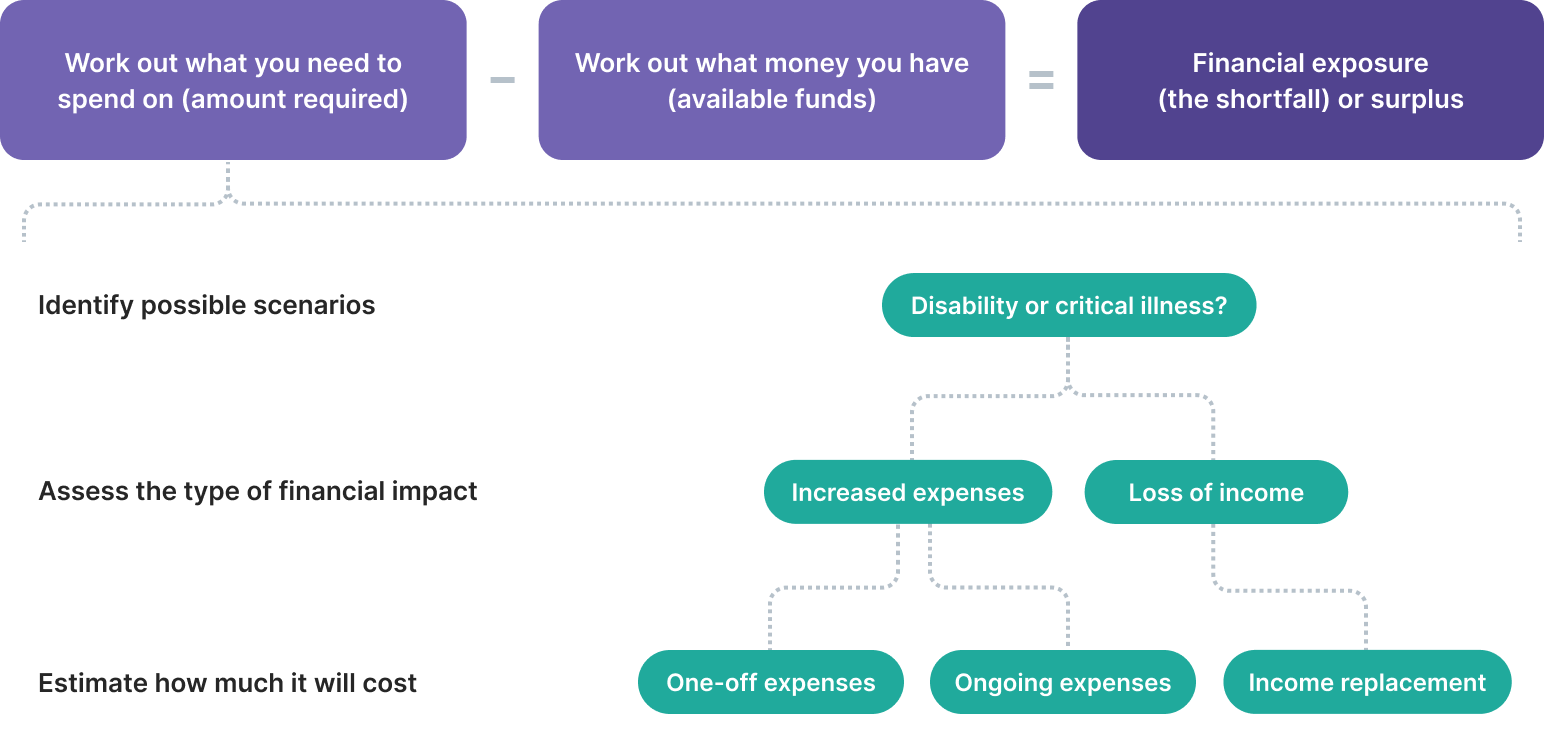
Some of the common costs to consider are:
Debts and mortgage repayments
Without income, you won’t be able to service your debts and mortgage repayments.
Living expenses
You and your family need money for everyday living expenses and utilities.
Medical expenses
While private health insurance may provide cover for some hospital costs, the cost of vital treatments may not be covered.
Home & vehicle alterations
You may need to alter your home to facilitate greater mobility, e.g. ramps, handlebars as well as modified vehicles to allow for a wheelchair.
Domestic assistance
You may need to get some help for domestic duties and work around the home.
Children's education or childcare
If you have children and depending on their age, you may need to cover the cost of childcare or school fees.
What to do if you have a financial exposure?
If you have a financial exposure, there are generally two options to consider:
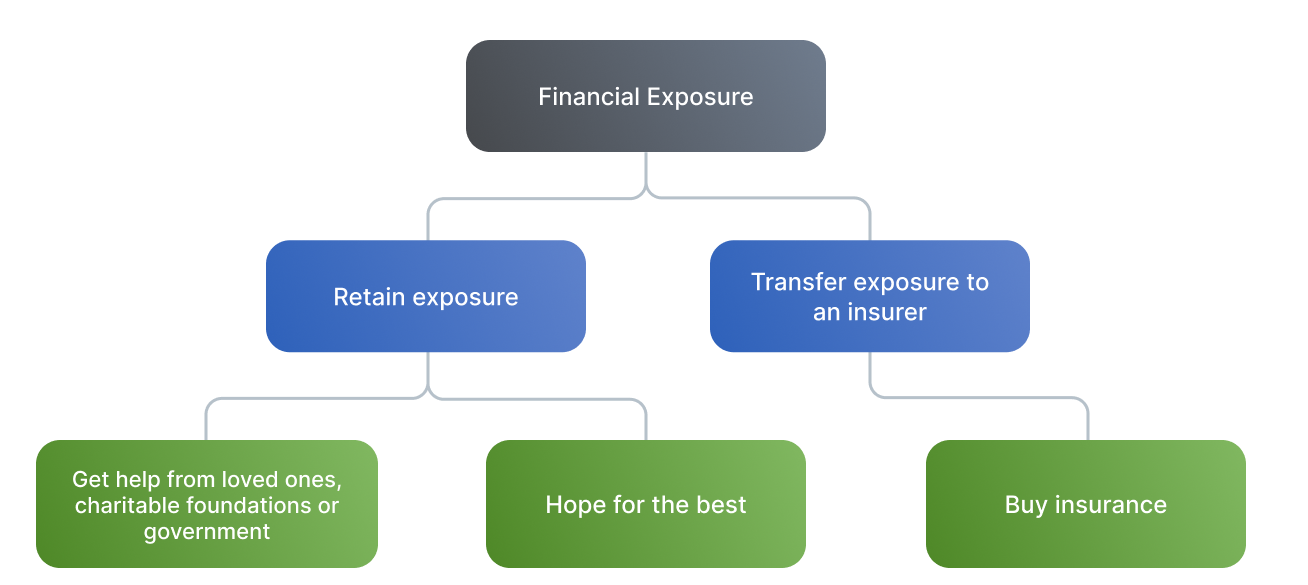
Consider using insurance policies to cover any financial shortfall
Insurance policies can be a cost-effective way to fund any financial shortfall. When choosing an insurance policy don't just compare on price. Check the insurance terms to see if they will give you the right protection. Also check the insurer's claim history as well as the support provided at the time of making a claim.
Types of insurance available for personal injury, illness and critical illness
Income protection insurance
Income protection insurance pays you a regular income if you’re unable to work because of partial or total disability.
Key terms under this type of insurance to consider are:
- Waiting period
- Benefit period
- Indemnity versus agreed value
Total & Permanent Disability insurance
Total and permanent disability (TPD) insurance pays you a lump sum if an illness or injury renders you totally and permanently disabled and can no longer work.
There can be differences in what this means. Some have an “own occupation” policy, while others have an “any occupation” policy.
Personal Accident & Sickness insurance
Personal accident and sickness insurance pays you a lump sum or periodic benefit in the event of accidental injuries or illnesses.
The coverage is more limited than income protection and the insurance providers can cancel the policy, unlike income protection which must continue for as long as you pay the premiums.
Critical illness insurance
Critical illness insurance, also known as trauma insurance, pays you a lump sum if you’re diagnosed with a critical illness or injury, such as cancer, stroke or a heart condition.
There can be differences in the medical definition of each critical illness used by each insurer.
Practical tips when it comes to insurance
- Like paying for a bodyguard, cheapest isn't always the best – The key thing is they are there when you need it most which is at claim time. Some policies offer many ancillary benefits.
- Put time into understanding the policy – While not the most interesting thing to read, it's important to know the terms and conditions and what you're actually paying for.
- Share the information with your loved ones so they know what to do at claim time – At time of claim, its most likely someone else will do this on your behalf, particularly if it's life cover. So let them know the details.
- Like a budget, regularly review to ensure it is current – Your financial situation changes over time and therefore your exposure will also change. Don't pay for unnecessary insurance or get caught out with a shortfall. Review at least once a year.